
Ballet guides
Why choose ballet for your child?
Ballet combines movement, discipline and artistic expression. For many children, it can be both an enjoyable hobby and an experience that contributes to their overall development.
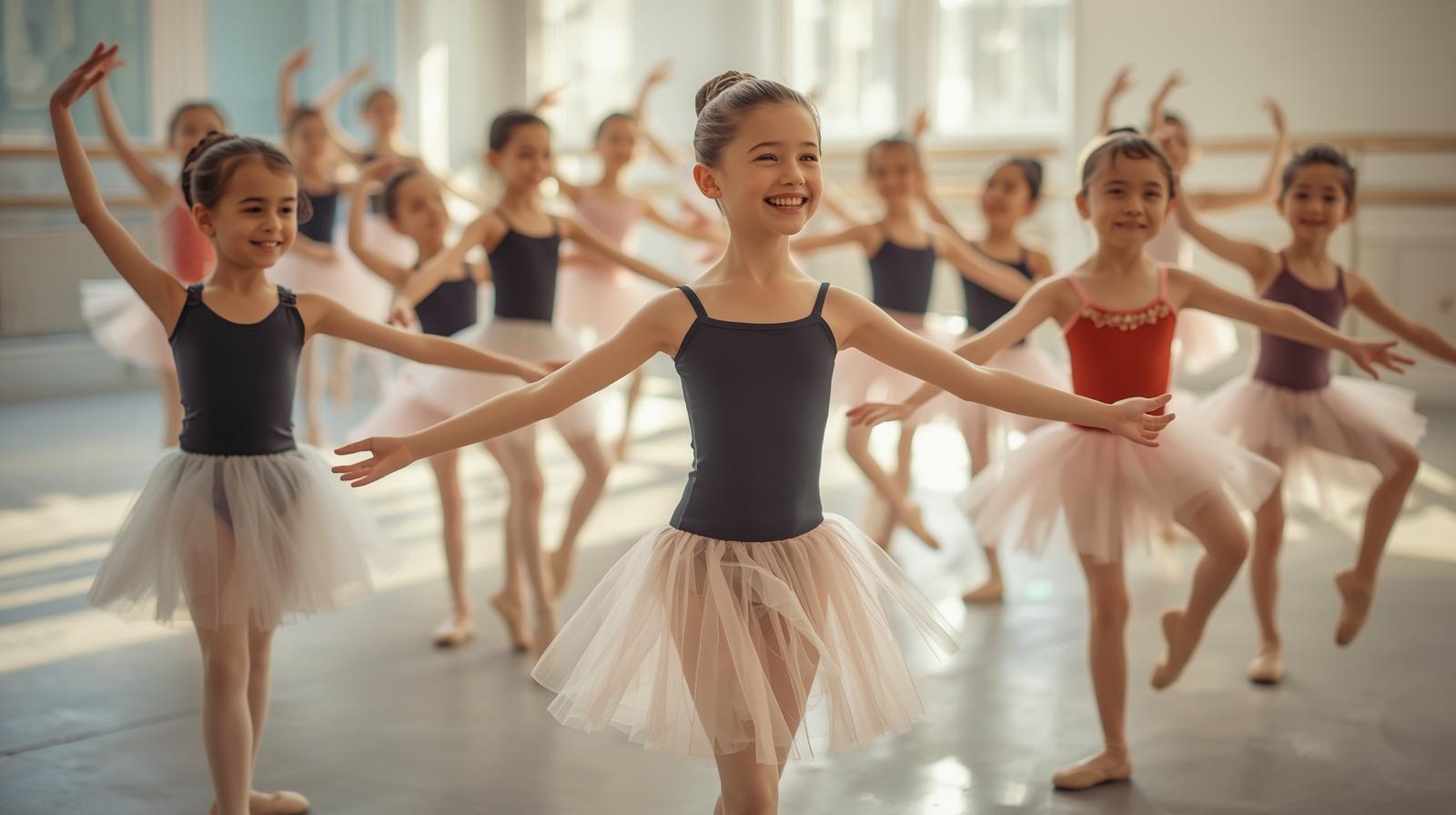
If you are considering ballet as an extracurricular activity for your child, here are some of its main benefits.
1. Developing mobility and flexibility
Ballet places considerable emphasis on mobility and flexibility. Through specific exercises and controlled movements, children gradually develop joint mobility and muscle flexibility.
Over time, these exercises help develop a more flexible, balanced body, benefiting both dance and general physical development.
2. An excellent form of physical activity
During ballet classes, children use almost all their muscle groups and improve their stamina, coordination and balance.
For children who spend a lot of time at school or in front of screens, ballet offers an enjoyable, structured opportunity to be active.
3. Developing grace and elegance in movement
Ballet is known for the elegance and beauty of its movements. Through the exercises and choreography they learn, children develop coordination and body control.
Over time, ballet helps them develop poise, correct posture and graceful movement.
4. Learning to work in a group
Although ballet may sometimes look like an individual activity, it involves a great deal of teamwork. In class, children learn to work together, follow the group’s rhythm and coordinate with their classmates.
Taking part in rehearsals and performances develops team spirit, patience and the ability to collaborate.
5. Learning to manage emotions
Performing in front of an audience is an important experience for children. Whether in a group dance or a solo, ballet helps them learn to manage their emotions and concentrate under pressure.
6. Developing responsibility
In group dances, every child has an important role. Children learn that successful choreography depends on everyone’s commitment and that one person’s mistake can affect the whole group.
They learn to make an effort for both their own success and the success of the team.
7. Building discipline and perseverance
Ballet is an art that requires discipline and patience. Movements are not learned overnight: progress comes gradually through practice and attention to detail.
By attending classes, children learn to be consistent, follow the teacher’s guidance and work steadily to improve their technique.
8. An introduction to art and classical music
Ballet gives children a valuable opportunity to encounter classical culture. Through classes and performances, they become familiar with classical music and some of the best-known works in the ballet repertoire.
Conclusion
Ballet can be a wonderful leisure activity for your child. It combines movement and art, developing mobility, physical fitness, grace and discipline, as well as the ability to work in a group.
In a suitable environment and at a pace adapted to each child, ballet can become an enjoyable, educational experience with lasting benefits.