Ballet guides
When is the right time for pointe shoes? Choosing the right pair and working with a specialist fitter
Choosing the right pointe shoes is an essential step in a ballerina’s development. Discover when the time is right for a first pair and why working with a specialist fitter matters.
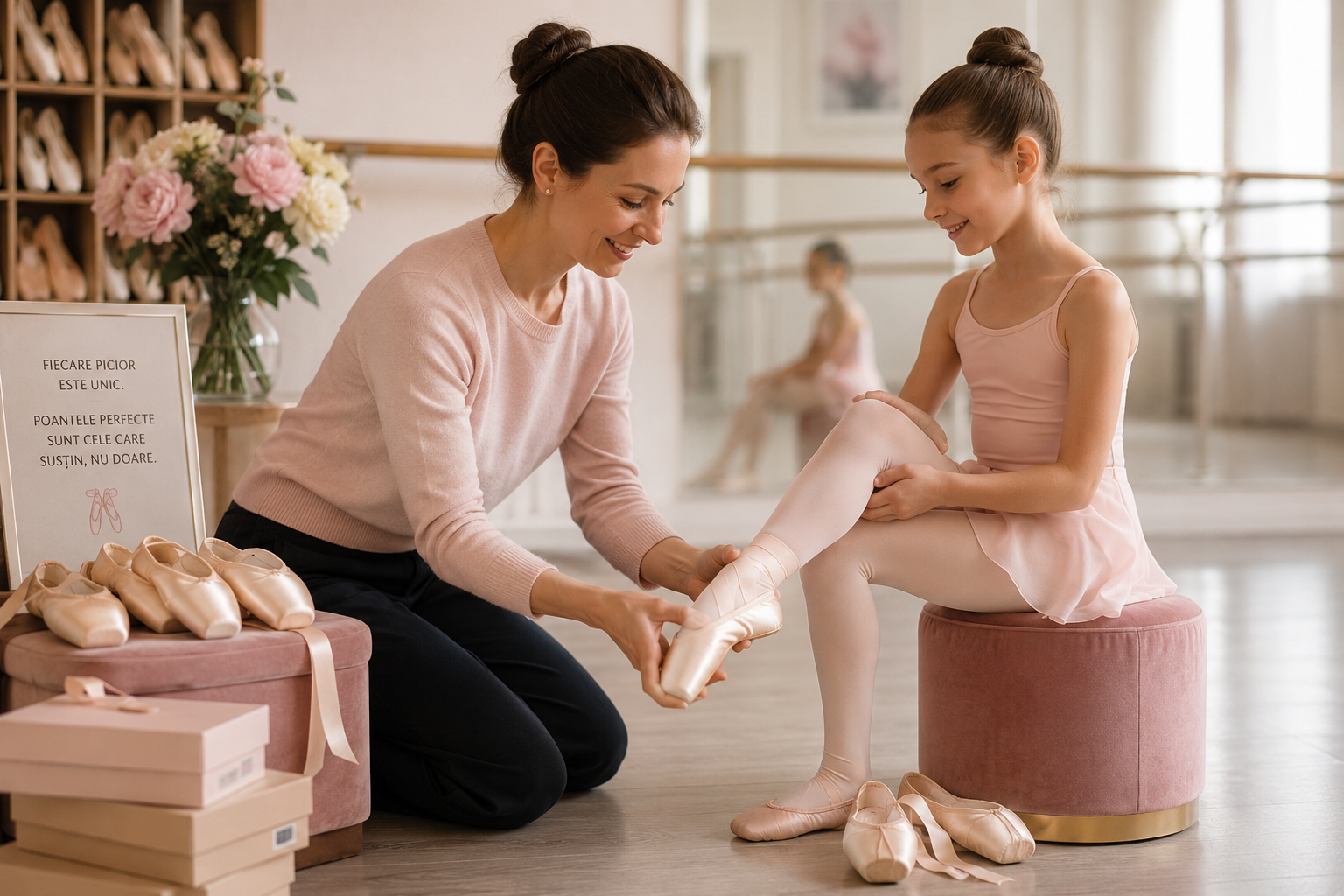
For many girls starting ballet, pointe shoes are a dream. They symbolise elegance, grace and the moment a ballerina begins moving towards a new technical level.
Starting pointe work is an exciting step, but it also matters greatly for the dancer’s health and proper development.
Choosing the right time and the right pointe shoe style can make the difference between a positive experience and one involving pain, frustration or injury.
Pointe shoe fitting involves more than shoe size
One of the most common misconceptions is that any ballerina can wear any pointe shoe, as long as the size is correct.
Every foot is different. Pointe shoes should be chosen according to:
- Foot shape
- Toe length and flexibility
- Arch type
- Ankle strength
- Technical level
- Age and ballet experience
- Training frequency
An unsuitable pointe shoe can put pressure on the wrong toes, cause instability and imbalance, and lead to persistent pain. Over time, these problems can affect posture, technique and foot health.
When is a ballerina ready to start pointe work?
There is no single age that applies to everyone. Although many students start at around 10–12, physical and technical readiness matters more than age.
The ballet teacher decides whether the student is ready, assessing:
- Ankle stability
- Muscle strength
- Body control
- Posture
- Correct alignment
- Experience at the barre and in the centre
Starting pointe work too soon can put pressure on joints and muscles that are not yet sufficiently developed. Patience and appropriate progression are essential.
Different stages of ballet may call for different pointe shoes
The pointe shoes suitable for a beginner will differ from those used by an advanced ballerina.
At the beginning, many students need:
- More stable pointe shoes
- A more protective toe box
- Greater support
- A flexible or medium shank for gradual adaptation
As technique develops, a ballerina may need:
- Lighter styles
- Different toe boxes
- Support suited to the arch
- Pointe shoes that allow a more refined foot line and greater mobility
Fit should therefore be reassessed regularly. A ballerina’s feet change as she develops and as training intensity changes.
Why pointe shoes should not be chosen solely online
Many dance products can now be ordered quickly online. But choosing pointe shoes exclusively online can be risky, especially for the first few pairs.
Pointe shoes cannot be selected by size or a chart alone. Two ballerinas who wear the same street shoe size may need completely different pointe shoe styles.
An in-person fitting with a specialist offers important advantages:
- Trying several styles
- Checking the correct position en pointe
- Assessing stability and alignment
- Identifying pressure points
- Choosing the right toe box and shank
- Adjusting the choice to each dancer’s technical level and individual needs
Many problems cannot be properly assessed from photographs or measurements sent online. An in-person fitting is particularly important at the beginning, for the ballerina’s safety and healthy development.
The fitter’s role in choosing pointe shoes
Pointe shoes should not be chosen by guesswork or on a general recommendation alone. A specialist fitter is especially important for a first pair.
An experienced fitter assesses:
- Foot shape
- Toe position
- Arch type
- The ballerina’s level
- Technical needs
- Comfort and stability en pointe
A fitter can also identify problems that may not be obvious to a parent or a beginner:
- Pointe shoes that are too wide or too narrow
- Insufficient support
- Instability in relevé
- Excessive pressure on particular toes
- Styles unsuited to the foot shape
A proper fitting offers comfort, safety, technical progress and confidence.
A first pair of pointe shoes should inspire confidence, not pain
There is a myth that pointe shoes “have to hurt”. Although ballet involves discipline and effort, properly fitted pointe shoes should NOT cause intense pain or persistent injuries.
A suitable pair should provide:
- Support
- Stability
- Safety
- Control
- Freedom of movement
- A beautiful foot line
When a ballerina feels supported and comfortable, she can focus on what matters most: dancing.
The right pointe shoes support a ballerina’s progress
Behind every elegant stage appearance are hard work, patience and sound choices. Pointe shoes are an essential technical tool in a dancer’s development.
Choosing when to start pointe work and which shoes to wear should be done carefully, together with teachers and/or a specialist fitter.
Whenever possible, pointe shoes should be selected through a dedicated in-person fitting rather than exclusively online. Every foot is different: the right pointe shoes offer safety, support and the freedom to dance with confidence and joy.