
Ballet guides
When does a ballerina’s professional career begin and end – and what comes next?
A ballerina’s career is intense, demanding and relatively short on stage, but a passion for dance can continue in many forms after performing ends.
Ballet is one of the most demanding arts, physically and mentally. A ballerina’s career usually begins very early and spans a relatively short period compared with other artistic professions.
It is an intense professional journey, built on years of training, discipline and complete dedication.
The beginning of a ballet journey
The path towards a professional ballet career usually starts in childhood. Most ballerinas begin studying dance between the ages of five and eight, while the body is still flexible and receptive to developing correct technique.
This stage establishes the foundations of discipline, posture and coordination.
At around 10–12, training becomes more serious, and students often enter specialist dance schools. This is a period of developing classical technique, physical stamina and artistic expression.
A professional career generally begins between 16 and 20, when dancers may join a ballet company or opera house. Ballerinas begin taking part in performances, interpreting roles and building an artistic reputation.
The peak of a career
Artistic maturity usually develops between 20 and 30. During these years, ballerinas reach a balance between physical strength, technique and expression.
They may perform leading roles, take part in tours or competitions and establish their position within a ballet company.
This is often the most intense and demanding period, with considerable performance pressure and a busy schedule.
The end of a stage career
Compared with other artistic professions, a ballerina’s stage career is relatively short. In many cases, it ends between 35 and 40, sometimes earlier, depending on physical demands, injuries and the pace of professional work.
Ballet requires exceptional flexibility, strength and stamina, and the body cannot sustain these demands at the same intensity indefinitely. Retirement from the stage is therefore a natural stage in a dancer’s life.
What comes after a ballerina’s performing career?
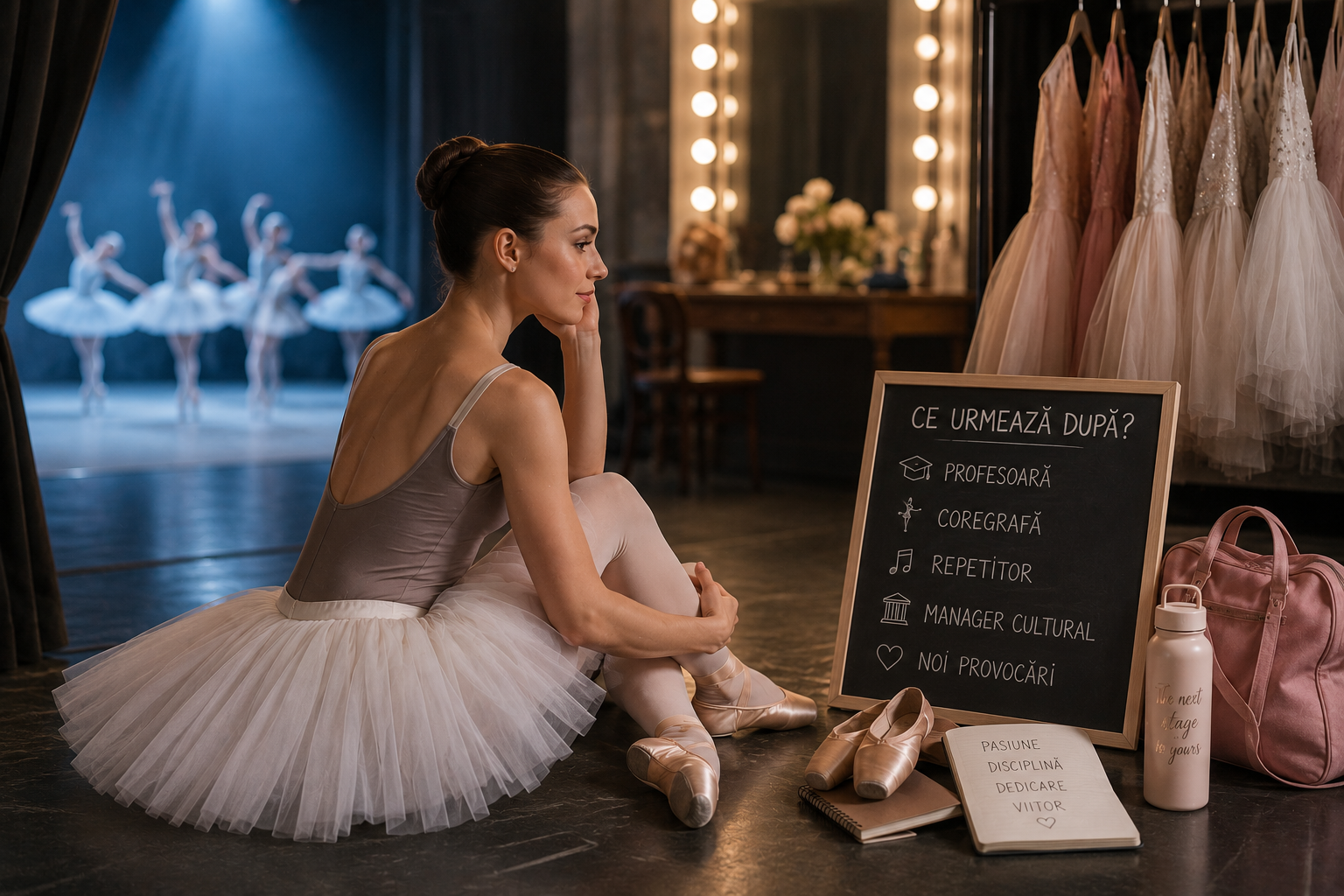
The end of a stage career does not end the relationship with dance. For many ballerinas, it marks the start of a new professional chapter.
Teaching dance is one of the most common paths. Experience gained on stage and in rehearsals becomes a valuable resource for training new generations.
Others become choreographers, create performances or take part in contemporary dance and theatre projects.
Some continue working in cultural institutions as répétiteurs, artistic directors or arts managers. In these roles, they contribute to the development of ballet companies and the organisation of performances.
Others discover new passions and build careers in entirely different fields, drawing on the discipline, determination and work ethic developed through years of dance.
An important transition
Moving from stage life into a new professional chapter can be difficult. Dance has been central to a ballerina’s life for years, and the change can bring strong emotions.
The artistic experience gained nevertheless provides a solid foundation for new beginnings.
Conclusion
A ballerina’s career is intense, absorbing and challenging. It begins in childhood, reaches its peak in youth and ends relatively early as a performing career.
The end of that stage is a transformation. Many ballerinas continue contributing to dance in different ways, showing that a passion for art continues beyond the stage.